

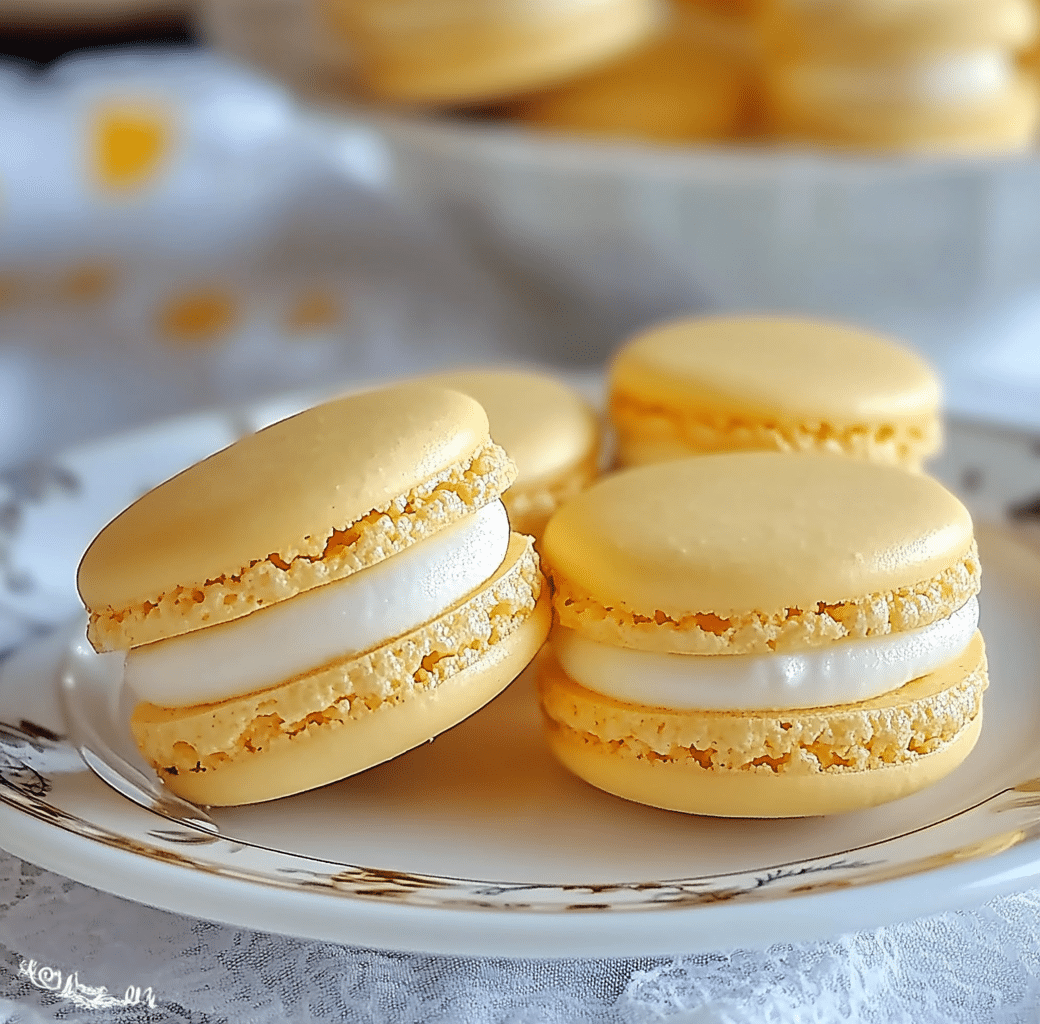
If you’re in the mood for a treat that’s as delightful to look at as it is to taste, then these lemon macarons are just the ticket! Bursting with bright, zesty flavors, these miniature French desserts are more than just a sweet indulgence; they embody elegance and refinement. Made with simple, gluten-free ingredients, anyone can perfect these charming little cookies that are wonderfully versatile. Whether you want them for an afternoon tea gathering, as a fancy dessert for a dinner party, or even a special gift, lemon macarons are sure to impress.
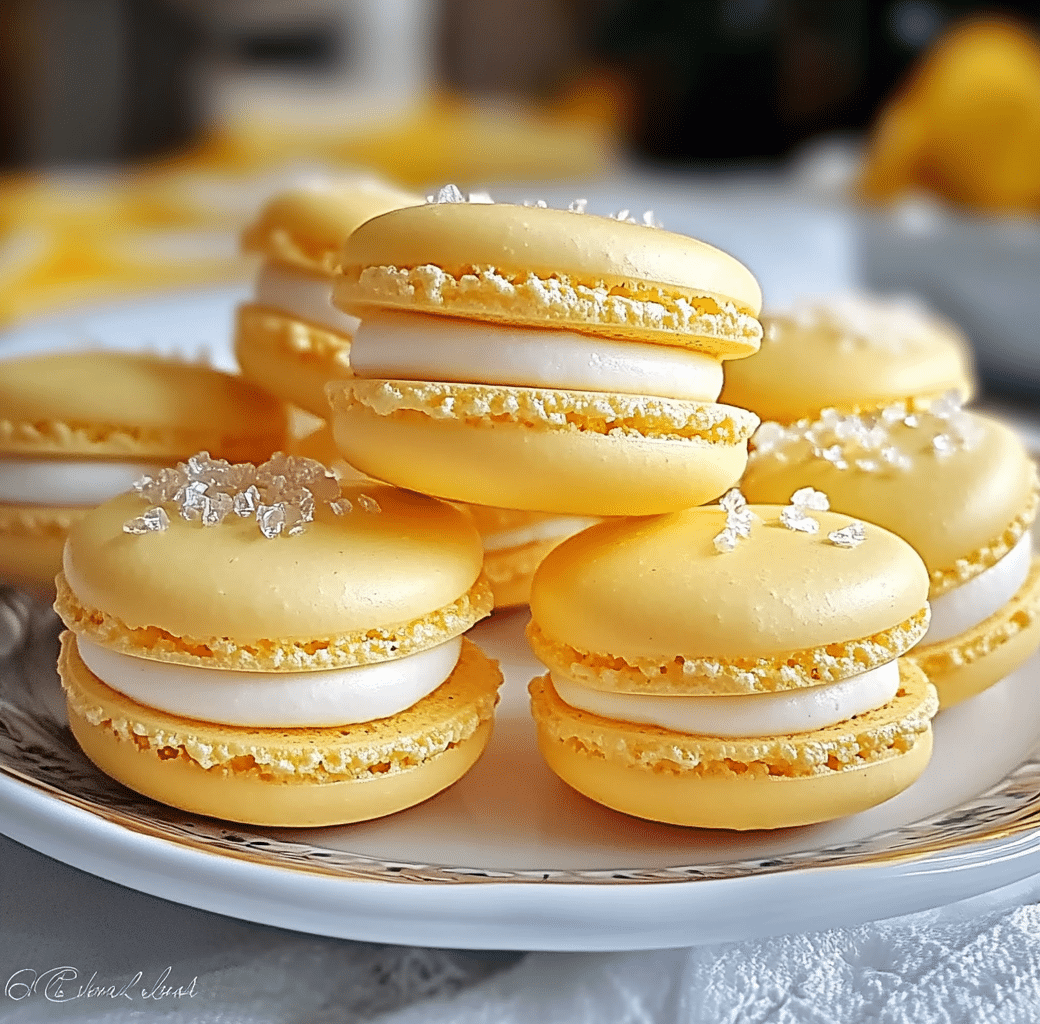
What truly sets these macarons apart is their unique combination of crisp almond shells filled with either a tangy lemon buttercream or a luxurious lemon curd. It’s a match made in dessert heaven that will have citrus lovers rejoicing. Plus, they provide an impressive touch to any dessert table, making them perfect for celebrations or holidays. The best part? Despite their seemingly complex nature, the baking process is straightforward and gratifying. Get ready to embark on a culinary adventure that will leave your taste buds invigorated and your friends asking for more!
Why You’ll Love This Lemon Macarons
- Flavor Explosion: The bright lemon flavor is refreshing and delightful, making these macarons a fantastic choice for summertime entertaining.
- Elegant Presentation: With their vibrant color and delicate structure, lemon macarons are sure to be the centerpiece of any dessert table.
- Gluten-Free: Perfect for gluten-sensitive guests, these macarons feature almond flour as a base.
- Versatile Fillings: Choose between a creamy buttercream or a tangy lemon curd to customize your macarons to suit your taste.
- Gift-Worthy: Packaged beautifully, these macarons make for a thoughtful homemade gift.
Preparation Phase & Tools to Use
Before diving into the culinary experience of making lemon macarons, it’s essential to prepare your kitchen and gather the right tools. Start by ensuring your work surfaces and bowls are completely clean and dry since any grease can affect the egg whites’ ability to whip to perfection. Lay out your silicone mat on baking trays, as this will prevent the macarons from sticking and help maintain their shape during baking. Equip yourself with a fine mesh sieve for sifting the almond flour and powdered sugar, ensuring a smooth macaron texture with no lumps.
Additionally, having a stand mixer or a hand mixer will be crucial for whipping your egg whites efficiently, reaching those stiff peaks that help create distinct shell structures. You’ll also need a piping bag fitted with a round tip for creating those perfect little circles on the baking sheet. It’s worthwhile to invest a little time in practicing your piping technique, as a steady hand will yield uniformly shaped macarons.
Ingredients
- 100g egg whites (room temperature)
- 100g granulated sugar
- 100g almond flour (sifted)
- 100g powdered sugar
- 0.5 tsp cream of tartar
- yellow gel food coloring
- 115g unsalted butter (softened)
- 200g powdered sugar (for filling)
- 1 tbsp lemon juice
- 1 tsp lemon zest
- (optional) 2 drops lemon extract
- 2 large egg yolks
- 50g sugar
- 2 tbsp lemon juice (for curd)
- 1 tsp lemon zest (for curd)
- 30g unsalted butter (for curd)
Instructions
Step 1: Prepare the Dry Ingredients
Begin by sifting the almond flour and powdered sugar into a large mixing bowl using a fine mesh sieve. This critical step helps eliminate any lumps or coarse bits, ensuring a smooth and fine mixture. This mixture is essential for achieving the delicate texture of the macaron shells.
Step 2: Whip the Egg Whites
In another bowl, beat the egg whites until they become foamy. Once foamy, add the cream of tartar, which stabilizes the egg whites during the whipping process. Gradually add the granulated sugar, continuing to whip the mixture until it forms stiff peaks. This may take a few minutes, so be patient. The goal is to achieve a glossy meringue that holds its shape when the whisk is lifted.
Step 3: Combine Ingredients and Color
Once you have your whipped egg whites, it’s time to add a drop or two of yellow gel food coloring for that signature lemon hue. Gently fold in the previously sifted dry ingredients using a spatula. Be careful during this step to avoid deflating the whipped egg whites; the batter should flow smoothly and resemble the consistency of flowing lava.
Step 4: Pipe the Macarons
Prepare to pipe the macarons by transferring your batter into a piping bag fitted with a round tip. On a silicone mat-lined baking tray, pipe small circles (about 1.5 inches in diameter) evenly spaced apart. After piping, tap the trays gently on the counter to release any trapped air bubbles, which can lead to cracked shells.
Step 5: Rest the Macarons
Allow the piped macarons to rest for 30 to 60 minutes. This crucial step is where a skin forms on the tops of the macarons, which helps create the iconic ‘foot’ during baking. You’ll know they’re ready when they feel dry to the touch.
Step 6: Bake
Preheat your oven to 300°F (150°C). Bake the macarons for 14 to 16 minutes, watching for the characteristic foot to develop. Once baked, let them cool completely on the tray before attempting to remove them, as they are delicate at this stage.
Step 7: Make the Filling
For the buttercream filling, beat softened butter until creamy and smooth in a bowl. Gradually add in the powdered sugar, lemon juice, and lemon zest, mixing until fluffy and well combined. If you’re leaning towards lemon curd, whisk the egg yolks and sugar together in a saucepan, then stir in the lemon juice and zest. Cook over medium heat until the mixture thickens, stirring continuously. Once thickened, remove from heat and incorporate the unsalted butter, straining to eliminate any lumps. Allow the curd to cool before using it as a filling.
Step 8: Assemble the Macarons
Pair the macaron shells together and fill one half with your chosen filling—be it the lemon buttercream or the lemon curd. Gently sandwich the two halves together while lightly pressing to allow the filling to distribute evenly without spilling out.
Step 9: Refrigerate
For the best flavor and texture, it’s best to refrigerate the macarons for 24 to 48 hours. This resting period allows the flavors to meld and the shells to soften slightly, resulting in a more enjoyable bite.
Variations
- Protein: Add finely chopped nuts for a nutty profile, or consider filling your shells with flavored creams for added decadence.
- Vegetables: While not a typical addition, a hint of basil or mint can offer a surprising herbaceous twist to the lemon flavor.
- Spices: A sprinkle of cardamom or ginger incorporated into the macaron batter can elevate these sweet bites, adding warmth and complexity.
Cooking Notes
- For best results, weigh your ingredients with precision as macarons are finicky about ratios.
- Humidity can affect the outcome of your macarons; try to make them on a dry day for the best results.
Serving Suggestions
- Pair lemon macarons with a refreshing cup of herbal tea or a sparkling lemonade for a delightful afternoon treat.
- Showcase them at your next gathering, arranged beautifully on a tiered cake stand for an impressive display.
Tips
- If you’re new to macaron making, consider watching a video tutorial to master the piping technique.
- Experiment with different extracts and flavorings in your buttercream or curd to create unique variations.
Prep Time, Cook Time, Total Time
- Prep Time: 45 minutes
- Cook Time: 30 minutes
- Total Time: 1 hour 15 minutes
Nutritional Information
- Calories: Approximately 90 per macaron
- Protein: 1g
- Sodium: 10mg
FAQs
How do I know when my macarons are done baking?
You can tell if your macarons are done when they appear shiny and have a firm ‘foot’ at the base. They should not wobble when touched gently.
Why did my macarons crack during baking?
Cracked macarons often result from overmixing the batter or baking at too high a temperature. Make sure to follow the resting time for the shells as it helps reduce cracks.
Can I freeze macarons?
Yes! Once filled, macarons can be frozen. Just ensure they are in an airtight container to preserve their texture and flavor.
What’s the difference between buttercream and lemon curd filling?
Buttercream is a sweeter, creamy filling made primarily with butter and sugar, while lemon curd is tangy, rich, and made with eggs, sugar, and butter, providing a vibrant flavor contrast.
Conclusion
These lemon macarons are truly a feast for the senses! With their bright, zesty, and elegant presentation, they are sure to win hearts at any gathering or serve as a lovely indulgence for yourself. Mastering the macarons might take a little practice, but the rewarding results are worth every effort. So, gather your ingredients, channel your inner pastry chef, and make these delectable delights! Don’t forget to share your variations and outcomes in the comments below. Your fellow bakers will love the inspiration!
Print
Delicious Lemon Macarons
- Total Time: 1 hour 15 minutes
- Yield: 12 servings 1x
Description
These lemon macarons are a delightful treat featuring zesty lemon flavor and elegant presentation, perfect for any occasion.
Ingredients
- 100g egg whites (room temperature)
- 100g granulated sugar
- 100g almond flour (sifted)
- 100g powdered sugar
- 0.5 tsp cream of tartar
- yellow gel food coloring
- 115g unsalted butter (softened)
- 200g powdered sugar (for filling)
- 1 tbsp lemon juice
- 1 tsp lemon zest
- (optional) 2 drops lemon extract
- 2 large egg yolks
- 50g sugar
- 2 tbsp lemon juice (for curd)
- 1 tsp lemon zest (for curd)
- 30g unsalted butter (for curd)
Instructions
- Begin by sifting the almond flour and powdered sugar into a large mixing bowl using a fine mesh sieve. This critical step helps eliminate any lumps or coarse bits, ensuring a smooth and fine mixture. This mixture is essential for achieving the delicate texture of the macaron shells.
- In another bowl, beat the egg whites until they become foamy. Once foamy, add the cream of tartar, which stabilizes the egg whites during the whipping process. Gradually add the granulated sugar, continuing to whip the mixture until it forms stiff peaks. This may take a few minutes, so be patient. The goal is to achieve a glossy meringue that holds its shape when the whisk is lifted.
- Once you have your whipped egg whites, it’s time to add a drop or two of yellow gel food coloring for that signature lemon hue. Gently fold in the previously sifted dry ingredients using a spatula. Be careful during this step to avoid deflating the whipped egg whites; the batter should flow smoothly and resemble the consistency of flowing lava.
- Prepare to pipe the macarons by transferring your batter into a piping bag fitted with a round tip. On a silicone mat-lined baking tray, pipe small circles (about 1.5 inches in diameter) evenly spaced apart. After piping, tap the trays gently on the counter to release any trapped air bubbles, which can lead to cracked shells.
- Allow the piped macarons to rest for 30 to 60 minutes. This crucial step is where a skin forms on the tops of the macarons, which helps create the iconic ‘foot’ during baking. You’ll know they’re ready when they feel dry to the touch.
- Preheat your oven to 300°F (150°C). Bake the macarons for 14 to 16 minutes, watching for the characteristic foot to develop. Once baked, let them cool completely on the tray before attempting to remove them, as they are delicate at this stage.
- For the buttercream filling, beat softened butter until creamy and smooth in a bowl. Gradually add in the powdered sugar, lemon juice, and lemon zest, mixing until fluffy and well combined. If you’re leaning towards lemon curd, whisk the egg yolks and sugar together in a saucepan, then stir in the lemon juice and zest. Cook over medium heat until the mixture thickens, stirring continuously. Once thickened, remove from heat and incorporate the unsalted butter, straining to eliminate any lumps. Allow the curd to cool before using it as a filling.
- Pair the macaron shells together and fill one half with your chosen filling—be it the lemon buttercream or the lemon curd. Gently sandwich the two halves together while lightly pressing to allow the filling to distribute evenly without spilling out.
- For the best flavor and texture, it’s best to refrigerate the macarons for 24 to 48 hours. This resting period allows the flavors to meld and the shells to soften slightly, resulting in a more enjoyable bite.
Notes
Macarons are sensitive to humidity and require precise measurements; consider using a kitchen scale for best results.
- Prep Time: 45 minutes
- Cook Time: 30 minutes
- Category: Dessert
Nutrition
- Calories: 90 kcal per macaron
- Sodium: 10 mg
- Protein: 1 g