

Sourdough bread has captured the hearts of many with its rich flavor, chewy texture, and crusty exterior. If you’ve ever wanted to create your own, having a healthy sourdough starter is essential. This Easy Sourdough Starter Recipe is a straightforward guide to cultivating your very own wild yeast. Not only is it simple—requiring just two ingredients—but it also immerses you in the delightful fermentation process, transforming flour and water into a bubbling, living culture. Enjoy the incredible aroma as it fills your kitchen, signaling the birth of your sourdough starter!
The beauty of sourdough lies in the way it connects you to a centuries-old tradition. Each starter has its own personality influenced by its environment, making it a unique addition to your kitchen. You can use this starter in various recipes for homemade breads, pancakes, and even waffles, giving a delightful tang to everything it touches. Best of all, making a sourdough starter is not an overnight affair—it takes some patience and care over 5 to 7 days. But the rewarding experience of nurturing it and eventually using it for baking makes this an adventure worth undertaking!
Why You’ll Love This Easy Sourdough Starter Recipe
- Simple Ingredients: The recipe uses only whole wheat or all-purpose flour and filtered water, both of which are easy to find.
- Cost-Effective: Homemade starters save money in the long run versus store-bought options.
- Health Benefits: Sourdough fermentation increases gut-friendly probiotics and nutrition.
- Fun and Educational: Cultivating a sourdough starter is a fun project that teaches you about fermentation and baking.
- Versatile Use: Once your starter is ready, it can be used in various recipes, from bread to pancakes.
Preparation Phase & Tools to Use
Before diving into this Easy Sourdough Starter Recipe, it’s essential to prepare your workspace. Start with a clean surface and gather your materials. You will need: a clean glass jar or bowl, a spoon for mixing, a kitchen scale for accurate measurements, and a breathable cover such as a cloth or a coffee filter secured with a rubber band. This covering allows air to flow while keeping out dust and pests.
Your kitchen’s atmosphere also plays a crucial role in the fermentation process. A warm, draft-free spot is ideal; aim for a temperature of around 70°F to 75°F (21°C to 24°C). This environment encourages wild yeast growth, leading to a bubbly, active starter.
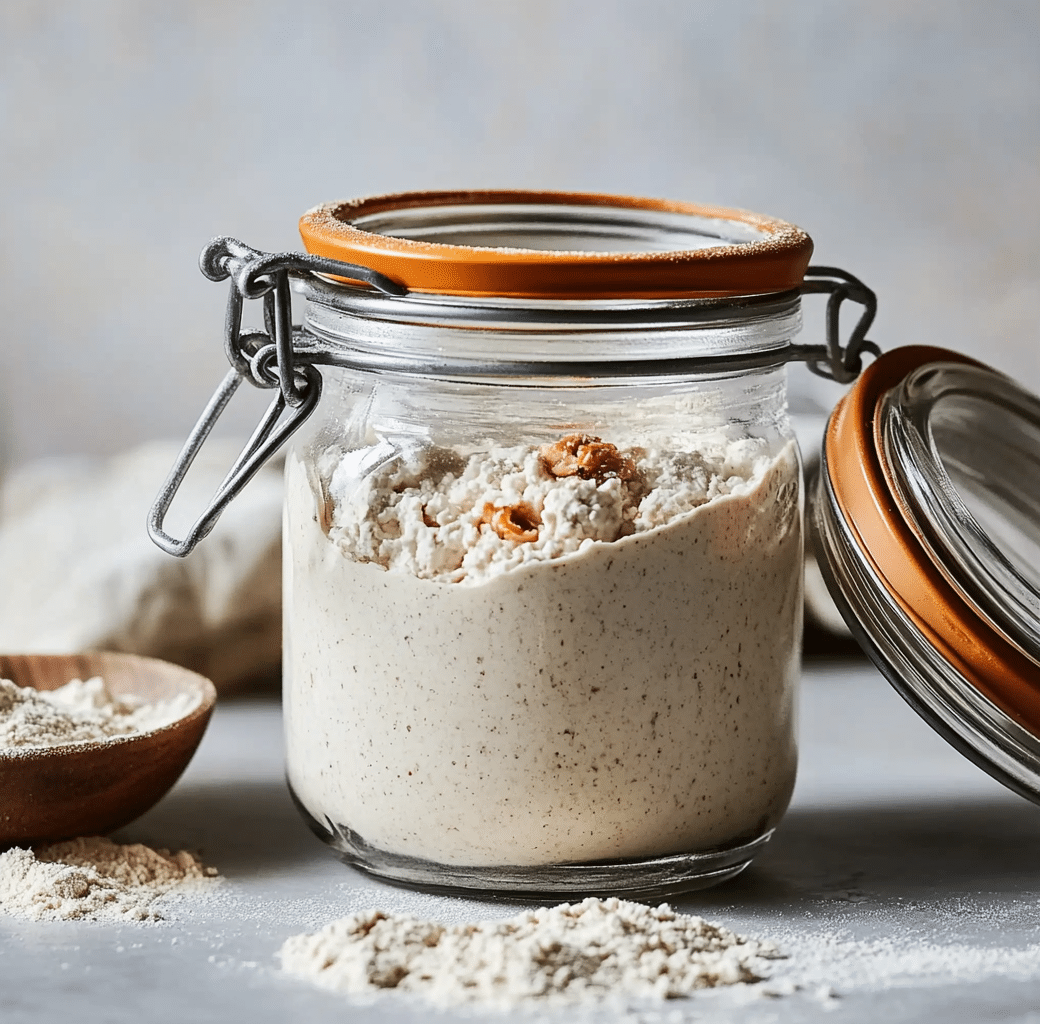
Ingredients
- 1 cup (120g) whole wheat or all-purpose flour
- 1/2 cup (120ml) filtered or non-chlorinated water
Instructions
Step 1: Combine Flour and Water
In a clean glass jar or bowl, pour 1 cup of flour and add 1/2 cup of filtered or non-chlorinated water. Stir the mixture until it reaches a smooth and thick consistency. This initial blend is the foundation of your sourdough starter, so take your time ensuring it’s well mixed. Transfer the mixture to your jar, cover it loosely with a breathable cloth or lid, and place it in a warm environment to begin fermentation.
Step 2: Daily Feeding
For the next 5 to 7 days, you will feed your starter daily. Each day, discard half of the starter (about 1/2 cup), then replenish it with equal parts water and flour—1/2 cup of flour and 1/2 cup of water. Stir thoroughly and cover again. Daily feedings keep the yeast alive and thriving, promoting the growth of bubbles and a sour aroma.
Step 3: Look for Signs of Fermentation
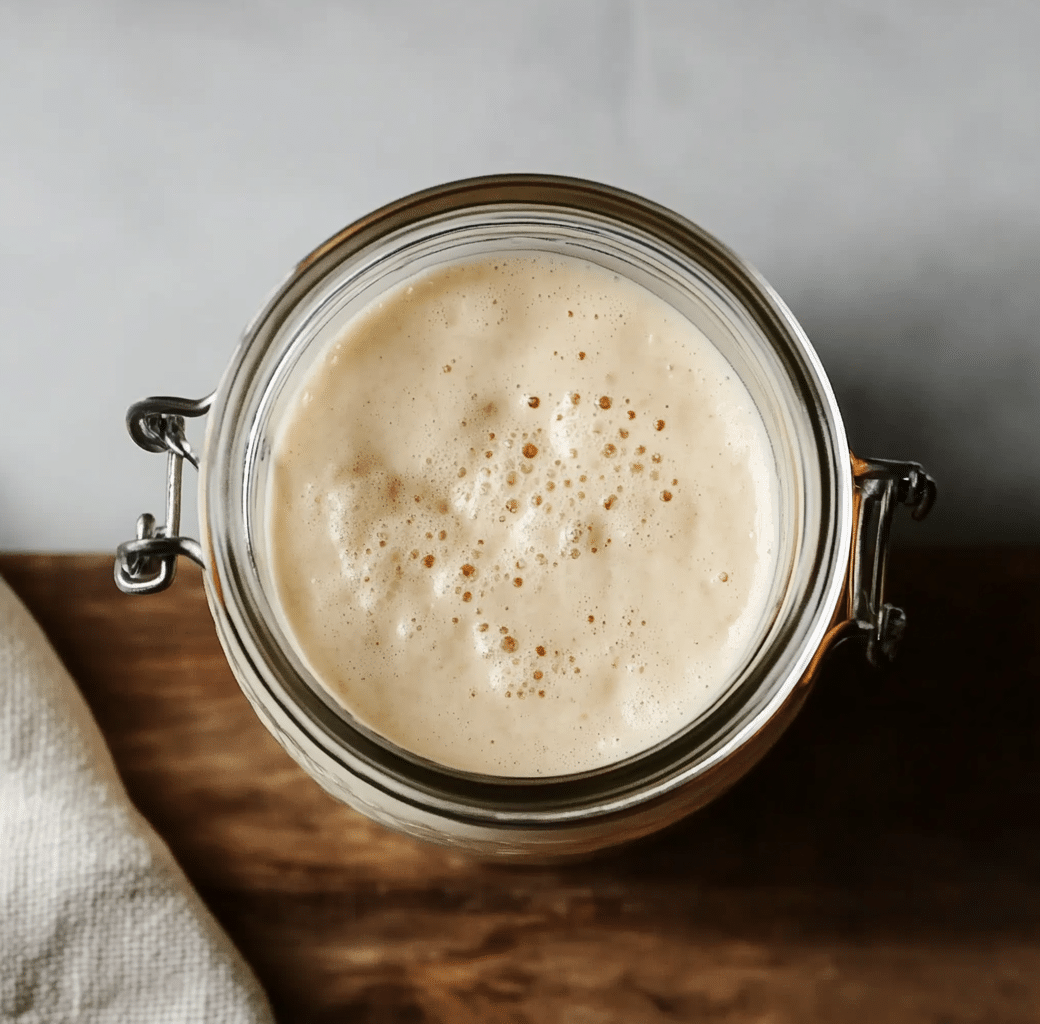
As your starter develops, keep an eye out for signs that it’s fermenting properly. You should notice an increase in bubbles and a sour smell, which typically indicates that the natural yeast is working. The volume of the starter should also double, signifying that it’s ready to use. Remember, these signs may vary based on the ambient temperature and the specific conditions in your kitchen.
Step 4: The Float Test
When your starter shows good bubbling activity and doubles in size consistently, it’s time to perform the float test. Take a small spoonful of the starter and drop it into a glass of water. If it floats, it’s ready for baking; if it sinks, continue feeding it daily until it passes the test. This step ensures that your starter has developed enough air bubbles to create a light and fluffy dough.
Step 5: Storage and Maintenance
Once your sourdough starter is active and bubbly, you can store it in the refrigerator if you’re not baking regularly. Be sure to feed it at least once a week to maintain its health. When you’re ready to bake, take it out, let it reach room temperature, and feed it a few times to reactivate it before using.
Variations
- Protein: You can include a tablespoon of milk or yogurt to boost the nutritional profile, though it’s not necessary.
- Flour Choices: Experiment with different types of flour like rye flour or spelt flour for unique flavors.
- Incorporate Whole Grains: Mix in whole grain flour for added nutrients and a hearty taste.
Cooking Notes
- Ensure your jars and utensils are clean to avoid contamination from unwanted bacteria.
- If the starter develops a layer of liquid (called hooch), it’s a sign it needs to be fed; simply pour it off before feeding.
Serving Suggestions
- Use your sourdough starter in traditional bread recipes or incorporate it into pizza dough.
- Try creating sourdough pancakes or waffles for a weekend brunch treat.
Tips
- Patience is key; some starters may take longer than a week to become fully active.
- Maintain a consistent feeding schedule for the best results.
Prep Time, Cook Time, Total Time
- Prep Time: 5 minutes (plus 5-7 days fermentation)
- Cook Time: Varies based on recipe used with the starter
- Total Time: 5 minutes (plus fermentation time)
Nutritional Information
- Calories: Approximately varies based on recipe usage
- Protein: Approximately varies based on flour type used
- Sodium: Depending on added ingredients in recipes
FAQs
Can I use tap water to make my sourdough starter?
It’s best to avoid tap water as it often contains chlorine, which can inhibit yeast growth. Use filtered or non-chlorinated water.
How do I know if my starter is ready?
Look for bubbles, a sour smell, and test it with the float test. If it floats, it’s ready to use!
What if my starter develops a strange color or smell?
If your starter develops an unusual color or smell, it’s best to discard it and start over to avoid any food safety issues.
Can I freeze my sourdough starter?
Yes, you can freeze your starter. Just make sure to feed it before freezing, and give it a couple of days to recover when you thaw it.
Conclusion
This Easy Sourdough Starter Recipe offers a simple yet enriching experience for both novice and seasoned bakers. From mixing flour and water to nurturing your starter into a bubbly culture, it’s a delightful process that rewards you with incredible flavors in your homemade bread. Remember, every starter is unique, and the care you put into yours will convert into the tasty treats you bake. Whether you experiment with various recipes or share your starter with friends, you’ll find happiness in the delightful world of sourdough baking. Don’t hesitate to leave a comment to share your experiences or modifications! Happy baking!
Print
Easy Sourdough Starter
- Total Time: 5 minutes (plus 5-7 days fermentation)
- Yield: 1 starter 1x
Description
This Easy Sourdough Starter Recipe offers a straightforward guide to cultivating your very own wild yeast.
Ingredients
- 1 cup (120g) whole wheat or all-purpose flour
- 1/2 cup (120ml) filtered or non-chlorinated water
Instructions
- In a clean glass jar or bowl, pour 1 cup of flour and add 1/2 cup of filtered or non-chlorinated water. Stir until smooth.
- For the next 5 to 7 days, discard half of the starter daily and replenish with equal parts water and flour.
- Watch for bubbles and a sour smell, indicating fermentation.
- Perform the float test to check readiness.
- If not baking regularly, store in the refrigerator, feeding once a week.
Notes
Patience is key; some starters may take longer than a week to become fully active.
- Prep Time: 5 minutes
- Cook Time: Varies based on recipe used with the starter
- Category: Bread
Nutrition
- Calories: Approximately varies based on recipe usage
- Sodium: Depending on added ingredients in recipes
- Protein: Approximately varies based on flour type used