

Are you ready to revolutionize your sandwich game with these Handmade Sub Rolls? Imagine biting into a sandwich enveloped in soft, fresh, homemade bread — it’s a taste sensation you’ll want to experience again and again. Ideal for any sandwich lover, these sub rolls are the ultimate base for a variety of fillings. Whether you’re crafting a meatball sub or a classic deli sandwich, these rolls complement your meal with robust flavor and texture.
What sets these sub rolls apart is their perfect balance. While they boast a soft and fluffy interior, they’re resilient enough to cradle even the most generous fillings without falling apart. This enviable combination is achieved with the use of bread flour, known for its high protein content. Combined with the richness of whole milk and the meticulous folding in of cold, cubed butter, these rolls guarantee a smooth and tender crumb. Master this recipe, and you, too, can become a star of homemade bread baking. Dive into this delicious adventure and discover how delightful homemade bread can really be!
Why You’ll Love These Handmade Sub Rolls
- Soft yet strong: Perfectly balanced to hold all your favorite fillings without splitting.
- Flavorful richness: Whole milk provides a luxurious taste that plain water lacks.
- Homemade charm: Experience the satisfaction of creating your own rolls, incomparable to store-bought options.
- Versatility: These rolls are ideal for any sandwich creation, from classic subs to imaginative fillings.
Preparation Phase & Tools to Use
To begin your bread-making journey, first prepare your kitchen and gather all necessary tools to ensure a seamless process. A well-organized workspace not only makes cooking more enjoyable but also ensures precision, crucial for baking success.
Start by setting up your station with all the measured ingredients, ensuring a clean, clutter-free environment. Essential tools for this recipe include a digital kitchen scale for exact measurements, a large mixing bowl for combining ingredients, a rolling pin to shape your dough correctly, and a sharp knife or razor blade for scoring. A parchment-lined baking sheet will be necessary for baking, and it’s wise to have a wire rack handy for cooling your freshly baked rolls.

Ingredients
- 1 cup whole milk (90°F)
- 2 ½ tbsp granulated sugar (30g)
- 2 tsp active dry yeast (or 1 packet, 11g)
- 3 cups bread flour
- 2 tsp fine sea salt (12g)
- 2 eggs, beaten
- 3 tbsp unsalted butter, cold and cubed
- 1 egg white (for egg wash)
- 1 tbsp water (for egg wash)
Instructions
Step 1: Activate the Yeast
Begin by activating the yeast. In a mixing bowl, combine the warm whole milk and granulated sugar, mixing gently. Sprinkle the active dry yeast over the mixture and let it sit for about 5-10 minutes until it becomes frothy. This step is crucial for ensuring the yeast is alive and active.
Step 2: Create the Dough
In a separate bowl, combine the bread flour and fine sea salt. Pour the frothy yeast mixture into a large bowl and slowly incorporate the dry ingredients along with the beaten eggs. As the mixture forms a shaggy dough, add the cold, cubed butter. Continue kneading until the dough becomes smooth and elastic, which will take about 8-10 minutes of hand-kneading.
Step 3: First Rise
Place the kneaded dough in a lightly greased bowl, cover it with a damp cloth, and let it rise in a warm environment for about an hour, or until it doubles in size. This bulk proofing process is vital for developing the bread’s flavor and texture.
Step 4: Shape the Rolls
Once the dough has risen, transfer it onto a lightly floured surface and gently punch it down to remove excess air. Divide the dough into six equal pieces. Shape each piece into a smooth ball, pinching the seams underneath. Flatten each ball with a rolling pin into a rectangle approximately 9 inches wide and 5 inches tall. Roll each rectangle into a tight loaf, pinching the seam to seal.
Step 5: Second Rise and Bake
Preheat your oven to 400°F (200°C). Arrange the formed rolls seam side down on a parchment-lined baking sheet. Cover them with a damp cloth and allow them to rise for another 30 minutes. Before baking, gently brush each roll with an egg wash, made from beaten egg white and water, for a glossy finish. Use a sharp knife to score three shallow slashes on each roll. Bake for 15-20 minutes until they’re golden brown and the internal temperature reaches 195-200°F (90-93°C). Cool on a wire rack before slicing to serve.

Variations
- Protein: Incorporate seeds like sunflower or sesame into the dough for an added protein boost.
- Vegetables: Try adding finely chopped onions or herbs like rosemary for extra flavor.
- Spices: Garlic powder or onion powder can be included for a savory twist.
Cooking Notes
- If your kitchen is particularly cool, consider proofing the dough in an oven turned off with the light on for extra warmth.
- For an enhanced flavor profile, replace half of the whole milk with buttermilk.
Serving Suggestions
- Pair with homemade pesto or sun-dried tomato spread for an elevated sandwich experience.
- Use these rolls as a base for garlic bread by brushing with garlic-infused butter and toasting in the oven.
Tips
- For more consistent results, use a kitchen scale to weigh your flour and other ingredients.
- If your rolls aren’t browning well, try moving them to a higher rack in your oven during the last few minutes of baking.
Prep Time, Cook Time, Total Time
- Prep Time: 15 minutes
- Cook Time: 15-20 minutes
- Total Time: Approximately 2 hours including proofing times
Nutritional Information
- Calories: Approximately 210 per roll
- Protein: Approx. 6g per roll
- Sodium: Approx. 240mg per roll
FAQs
How do I know if my yeast is active?
If your yeast does not foam and bubble after sitting in the warm milk and sugar for about 10 minutes, it might be inactive. Consider starting over with fresh yeast.
Can I substitute all-purpose flour for bread flour?
Yes, you can, but the texture might be slightly less chewy since all-purpose flour has less protein than bread flour.
What’s the best way to store these rolls?
Store them in an airtight container at room temperature for up to three days, or freeze them for longer storage.
Can I make these rolls ahead of time?
Absolutely! Prepare them up to the plating stage and then freeze the unbaked rolls. When ready to eat, defrost and proceed with the baking instructions.
Conclusion
Crafting Handmade Sub Rolls is a rewarding baking experience yielding deliciously superior bread. These rolls elevate any sandwich from ordinary to extraordinary with their soft texture and excellent flavor. Once you taste the freshness of homemade bread, it’s hard to go back to store-bought versions. Challenge yourself with this recipe and discover the gratification of baking your own bread. We encourage you to share your creations, leave comments, or try the suggested variations to make it truly your own!
Print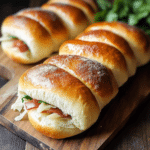
Handmade Sub Rolls
- Total Time: Approximately 2 hours including proofing times
- Yield: 6 rolls 1x
Description
Crafting handmade sub rolls is a rewarding baking experience yielding deliciously superior bread.
Ingredients
- 1 cup whole milk (90°F)
- 2 ½ tbsp granulated sugar (30g)
- 2 tsp active dry yeast (or 1 packet, 11g)
- 3 cups bread flour
- 2 tsp fine sea salt (12g)
- 2 eggs, beaten
- 3 tbsp unsalted butter, cold and cubed
- 1 egg white (for egg wash)
- 1 tbsp water (for egg wash)
Instructions
- Begin by activating the yeast. In a mixing bowl, combine the warm whole milk and granulated sugar, mixing gently. Sprinkle the active dry yeast over the mixture and let it sit for about 5-10 minutes until it becomes frothy.
- In a separate bowl, combine the bread flour and fine sea salt. Pour the frothy yeast mixture into a large bowl and slowly incorporate the dry ingredients along with the beaten eggs. As the mixture forms a shaggy dough, add the cold, cubed butter. Continue kneading until the dough becomes smooth and elastic, which will take about 8-10 minutes of hand-kneading.
- Place the kneaded dough in a lightly greased bowl, cover it with a damp cloth, and let it rise in a warm environment for about an hour, or until it doubles in size.
- Once the dough has risen, transfer it onto a lightly floured surface and gently punch it down to remove excess air. Divide the dough into six equal pieces. Shape each piece into a smooth ball, pinching the seams underneath. Flatten each ball with a rolling pin into a rectangle approximately 9 inches wide and 5 inches tall. Roll each rectangle into a tight loaf, pinching the seam to seal.
- Preheat your oven to 400°F (200°C). Arrange the formed rolls seam side down on a parchment-lined baking sheet. Cover them with a damp cloth and allow them to rise for another 30 minutes. Before baking, gently brush each roll with an egg wash, made from beaten egg white and water, for a glossy finish. Use a sharp knife to score three shallow slashes on each roll. Bake for 15-20 minutes until they’re golden brown and the internal temperature reaches 195-200°F (90-93°C).
Notes
If your kitchen is particularly cool, consider proofing the dough in an oven turned off with the light on for extra warmth.
- Prep Time: 15 minutes
- Cook Time: 15-20 minutes
- Category: Bread
Nutrition
- Calories: Approximately 210 per roll
- Sodium: Approx. 240mg per roll
- Protein: Approx. 6g per roll