
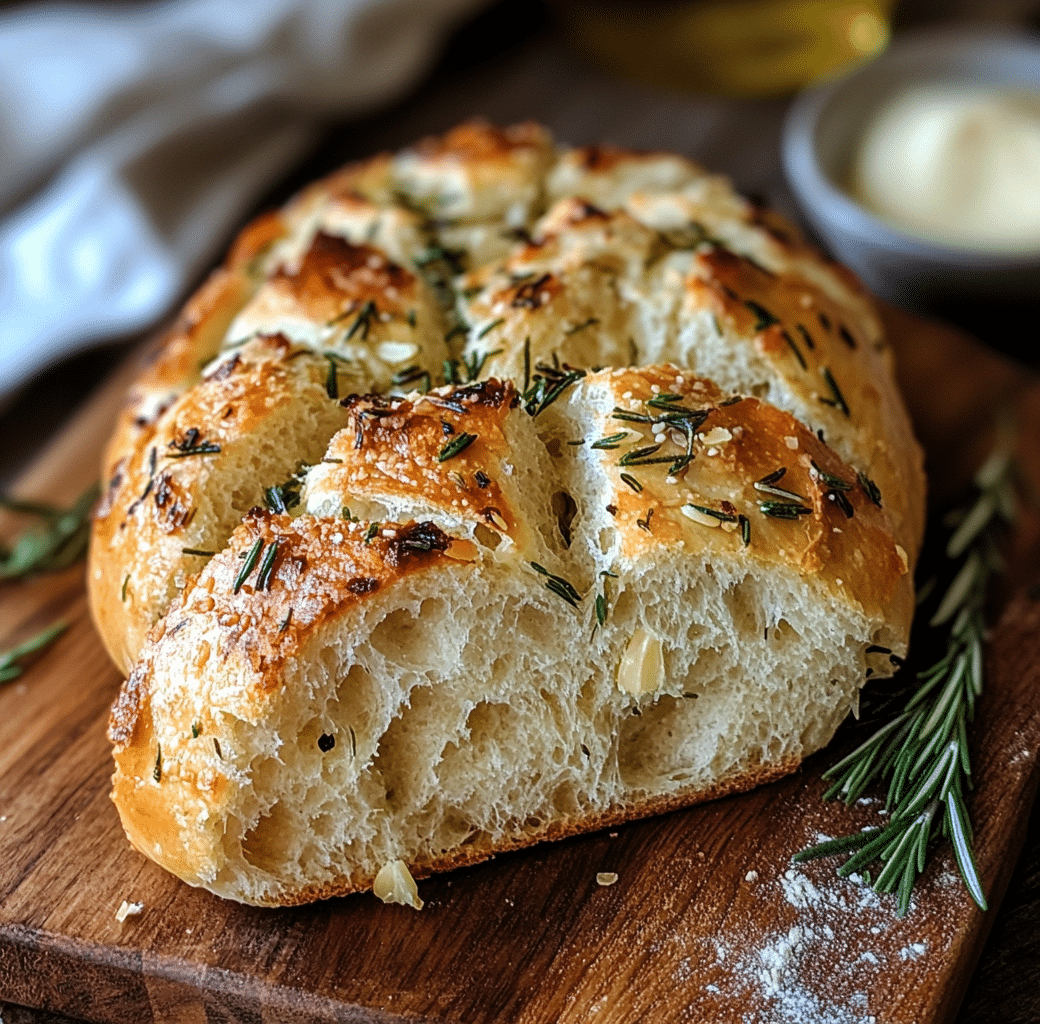
Imagine the delight of pulling a warm loaf of homemade bread from your oven, its golden crust crackling enticingly as it cools on the counter. The aroma wafts through your kitchen, mingling sweet herbal notes of rosemary with the comforting warmth of garlic. This is not just any bread; it’s a Rustic No-Knead Rosemary Garlic Bread. With its simple ingredients and no-knead method, this recipe is the epitome of ease and elegance. The soft, airy interior with its savory bursts of rosemary and garlic brings a new level of flavor to your everyday bread, while the crunchy, golden crust gives it an artisanal finish. Whether you’re a novice baker or a seasoned pro, this bread invites you to embrace both simplicity and sophistication in your baking journey.
Why You’ll Love This Rustic No-Knead Rosemary Garlic Bread
The allure of this bread goes beyond its delicious taste and aroma. Here’s why it’s bound to become a staple in your home:
- Effortless: The no-knead method means you don’t need any fancy skills.
- Full of Flavor: Fresh rosemary and garlic elevate this loaf to gourmet status.
- Rustic & Impressive: Looks and tastes like something from a high-end bakery, with minimal effort.
Preparation Phase & Tools to Use
Before embarking on the culinary journey to make this irresistible bread, a few preparatory steps can set you up for success. Start by choosing a clean, spacious area for dough preparation. Organize your ingredients and ensure you have the necessary tools at hand. A sturdy mixing bowl will be your primary vessel where the magic begins. You’ll also need a wooden spoon or spatula for mixing, parchment paper to prevent sticking and make handling easier, and a Dutch oven or heavy-lidded pot—this will act as your mini bread oven, crucial for developing that crunchy crust. A sharp knife or bread lame is useful for scoring the dough, allowing it to expand beautifully while baking.
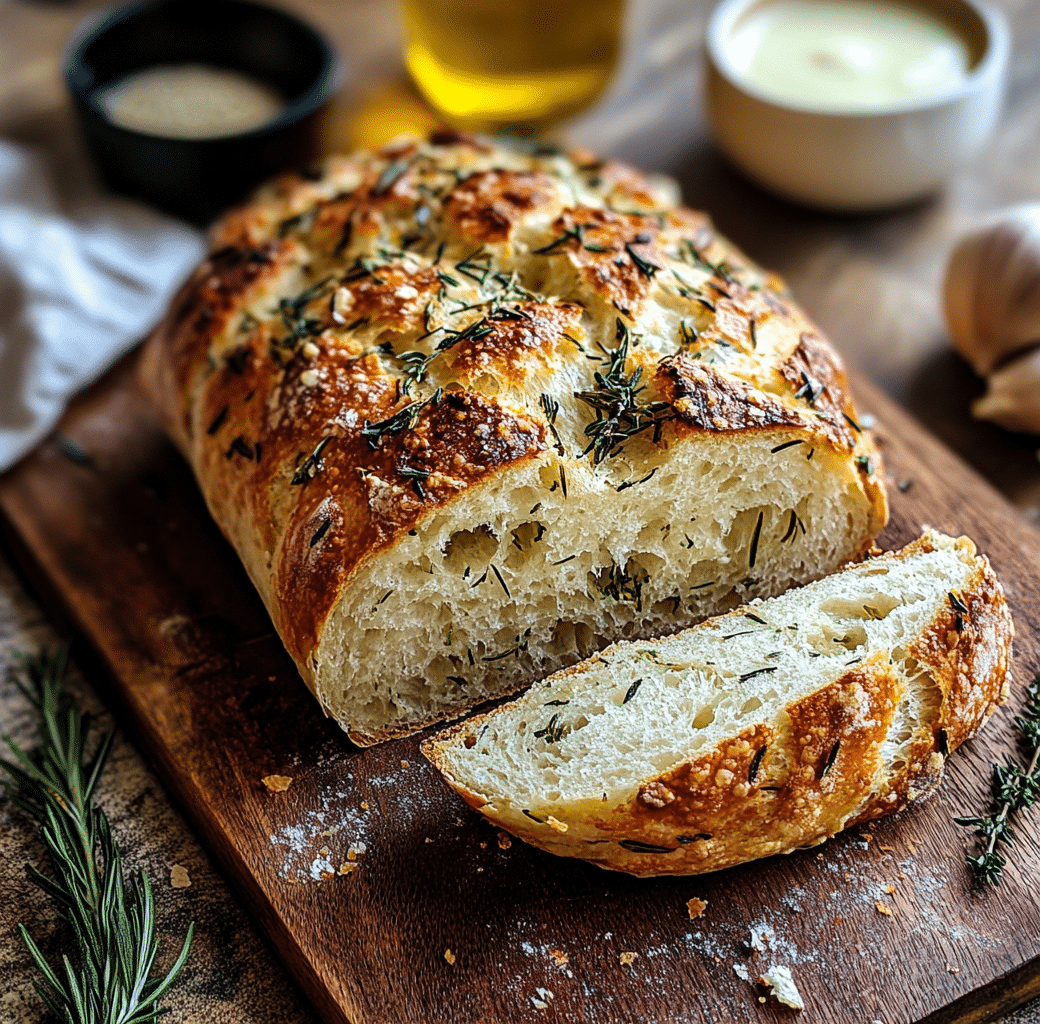
Ingredients
This bread relies on a handful of kitchen staples and fresh herbs to create its remarkable flavor:
- 3 cups all-purpose flour – the base of the bread.
- 1 ½ teaspoons salt – enhances flavor.
- ½ teaspoon active dry yeast – provides the rise.
- 1 ¼ cups warm water (110°F/45°C) – activates the yeast.
- 2 tablespoons fresh rosemary, chopped – aromatic and flavorful.
- 2 cloves garlic, minced – warm, savory notes.
- 2 tablespoons olive oil – keeps the crumb tender.
Instructions
Step 1: Mix the Dough
Begin by combining the all-purpose flour, salt, and yeast in a large mixing bowl. Stir in the chopped rosemary and minced garlic, ensuring that they are evenly distributed throughout the dry ingredients. Gradually add the warm water and olive oil to the mixture, stirring with a spoon or spatula until a sticky dough forms. Cover the bowl with a clean cloth or plastic wrap and allow the dough to rest at room temperature for 12 to 18 hours. This extended rest allows the dough to ferment and develop its complex flavors.
Step 2: Shape the Dough
Once your dough has developed bubbles and expanded, gently transfer it onto a floured surface. Here, carefully shape it into a round loaf, being mindful not to deflate the air bubbles that give the bread its airy texture. This step doesn’t require kneading—just a gentle touch to form a cohesive shape.
Step 3: Allow for a Second Rise
Place the shaped dough on a piece of parchment paper and cover it lightly. Let it rise for another 30 to 40 minutes. Meanwhile, preheat your oven to 450°F (230°C) with the Dutch oven inside to ensure it is hot and ready for the dough.
Step 4: Bake
Using oven mitts, carefully remove the hot Dutch oven from the oven. Lower the parchment paper with the dough into the pot. Cover with the lid and return to the oven to bake for 30 minutes. Then, remove the lid and bake for an additional 10 to 15 minutes until the crust turns a deep golden brown.
Step 5: Cool & Serve
Once baked to perfection, take the bread out of the oven and let it cool for 10 to 15 minutes. This cooling period allows the bread to set, making it easier to slice. Serve warm, optionally with butter or olive oil for dipping.
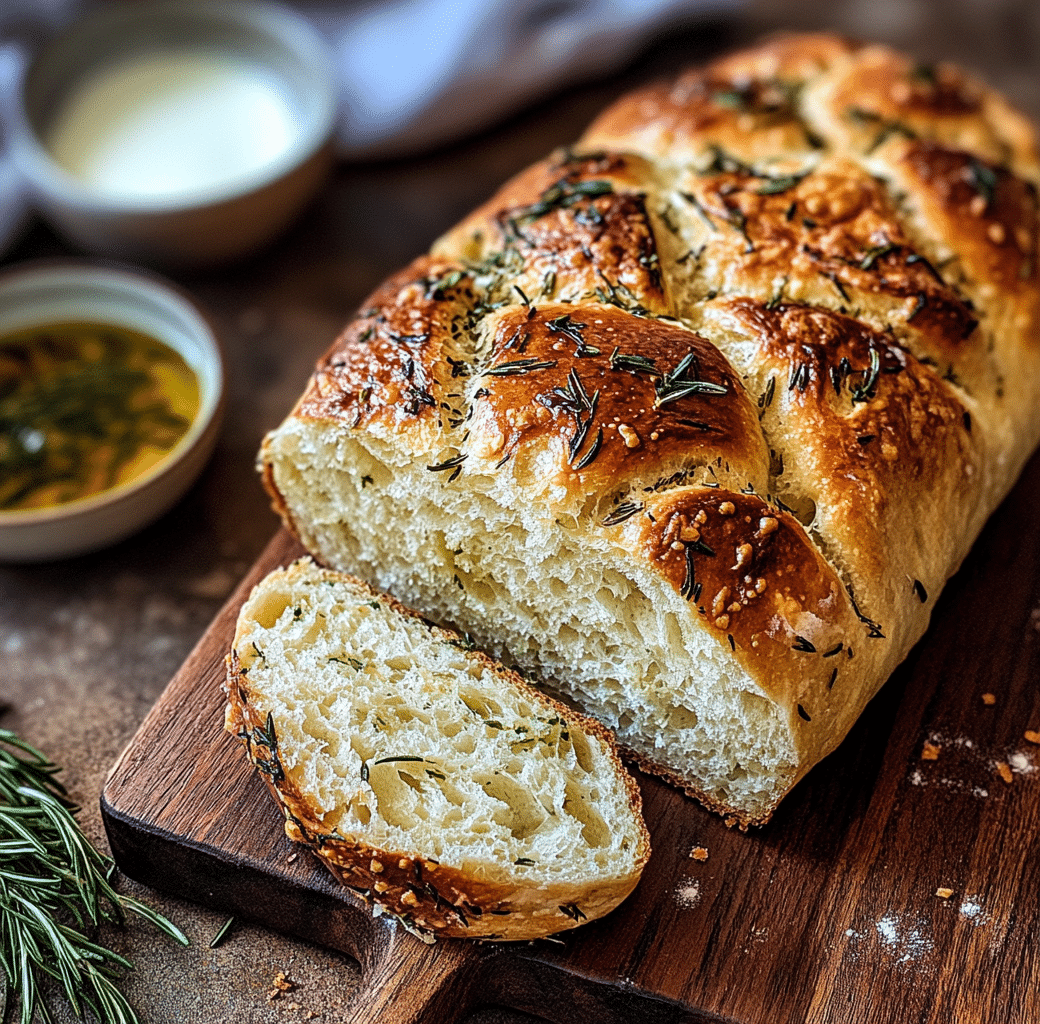
Variations
This bread offers a wonderful canvas for culinary creativity. Consider these variations:
- Protein: Incorporate cooked and crumbled bacon or feta cheese for a savory twist.
- Vegetables: Add sun-dried tomatoes or caramelized onions for extra depth of flavor.
- Spices: Try adding cracked black pepper or red chili flakes for a bit of heat.
Cooking Notes
- For best results, let your dough rise in a warm, draft-free environment.
- If the top of your bread is browning too quickly, tent it with foil during baking.
Serving Suggestions
- Pair this bread with a hearty soup, like tomato basil or creamy potato leek.
- Serve it as part of a charcuterie board with cured meats, cheeses, and olives.
Tips
- Ensure all your ingredients are fresh for the best flavor, especially the yeast and rosemary.
- Don’t skip the preheat step for the Dutch oven—it’s essential for the perfect crust.
Prep Time, Cook Time, Total Time
- Prep Time: 12–18 hours (including resting time)
- Cook Time: 45 minutes
- Total Time: Approximately 13–19 hours
Nutritional Information
- Calories: Approximately 180 calories per slice
- Protein: 4 grams per slice
- Sodium: 240 mg per slice
FAQs
Can I use dried rosemary instead of fresh?
Yes, you can substitute dried rosemary for fresh, but use about half the amount, as dried herbs are more concentrated.
Can I make this bread gluten-free?
You can try using a gluten-free all-purpose mix, but results may vary as gluten helps with texture and structure.
Is it possible to freeze this bread?
Absolutely! Once cooled, wrap the bread well in plastic wrap and foil before freezing. Thaw and reheat in the oven for best results.
Why is my dough so sticky?
The dough for this bread is naturally sticky, which contributes to its rustic texture. Make sure your hands and surface are well-floured when handling it.
Conclusion
Casting aside the mystery of artisanal baking, this Rustic No-Knead Rosemary Garlic Bread delivers simplicity and complexity in every slice. Its no-fuss method and remarkable flavor make it a go-to choice for both casual meals and special gatherings. Whether served solo or accompanied by a sumptuous spread, each bite speaks to your skill and taste. Try experimenting with flavors and share your results—because great recipes are meant to be enjoyed and remembered.
Print
Rustic No-Knead Rosemary Garlic Bread
- Total Time: Approximately 13–19 hours
- Yield: 1 loaf 1x
Description
This rustic bread combines ease with gourmet flavors, creating an artisanal masterpiece from simple, fresh ingredients. The no-knead method allows even novice bakers to create a loaf with a soft, airy interior and a crunchy crust infused with rosemary and garlic.
Ingredients
- 3 cups all-purpose flour – the base of the bread.
- 1 ½ teaspoons salt – enhances flavor.
- ½ teaspoon active dry yeast – provides the rise.
- 1 ¼ cups warm water (110°F/45°C) – activates the yeast.
- 2 tablespoons fresh rosemary, chopped – aromatic and flavorful.
- 2 cloves garlic, minced – warm, savory notes.
- 2 tablespoons olive oil – keeps the crumb tender.
Instructions
- Begin by combining the all-purpose flour, salt, and yeast in a large mixing bowl. Stir in the chopped rosemary and minced garlic, ensuring that they are evenly distributed throughout the dry ingredients. Gradually add the warm water and olive oil to the mixture, stirring with a spoon or spatula until a sticky dough forms. Cover the bowl with a clean cloth or plastic wrap and allow the dough to rest at room temperature for 12 to 18 hours.
- Once your dough has developed bubbles and expanded, gently transfer it onto a floured surface. Here, carefully shape it into a round loaf, being mindful not to deflate the air bubbles that give the bread its airy texture.
- Place the shaped dough on a piece of parchment paper and cover it lightly. Let it rise for another 30 to 40 minutes. Meanwhile, preheat your oven to 450°F (230°C) with the Dutch oven inside to ensure it is hot and ready for the dough.
- Using oven mitts, carefully remove the hot Dutch oven from the oven. Lower the parchment paper with the dough into the pot. Cover with the lid and return to the oven to bake for 30 minutes. Then, remove the lid and bake for an additional 10 to 15 minutes until the crust turns a deep golden brown.
- Once baked to perfection, take the bread out of the oven and let it cool for 10 to 15 minutes. This cooling period allows the bread to set, making it easier to slice. Serve warm, optionally with butter or olive oil for dipping.
Notes
If the top of your bread is browning too quickly, tent it with foil during baking.
- Prep Time: 12–18 hours (including resting time)
- Cook Time: 45 minutes
- Category: Bread
Nutrition
- Calories: Approximately 180 calories per slice
- Sodium: 240 mg per slice
- Protein: 4 grams per slice